By Nur Nabilah binti Norazman dan Nur Syahidatul Akma binti Azman
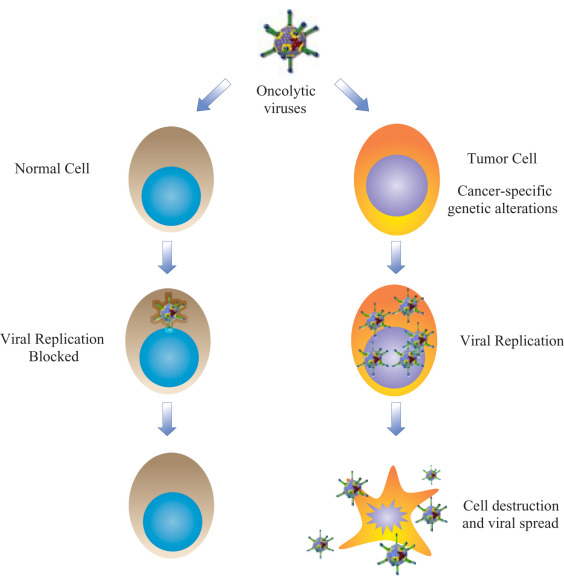
Virotherapy is an innovative cancer treatment that utilises genetically modified viruses to target and destroy cancer cells. Unlike traditional therapies, virotherapy harnesses the natural ability of viruses to infect and kill cells, but these viruses are engineered to selectively target cancerous cells without harming healthy tissue. This targeted approach minimises side effects and provides a promising alternative to conventional cancer treatments. The mechanism of virotherapy involves several key steps. First, the engineered virus is introduced into the patient’s body, where it seeks out and infects cancer cells. Once inside, the virus replicates rapidly, causing the cancer cell to burst and die. Additionally, the presence of the virus can stimulate the patient’s immune system to recognize and attack remaining cancer cells, providing a dual mode of action against the tumour.
An example of virotherapy is the use of Newcastle Disease Virus (NDV) to treat various types of cancers, including melanoma. NDV, a naturally oncolytic virus, has shown promise in selectively targeting and destroying cancer cells while sparing normal cells. In clinical trials, NDV-based treatments have demonstrated efficacy in shrinking tumours and improving outcomes in patients with advanced cancers. The success rate of virotherapy can vary depending on the type of cancer and the specific strain of NDV used. For example, NDV has shown encouraging results in clinical settings, with some patients experiencing significant tumor reduction and improved survival, and in some cases, achieving complete remission.
Comparing virotherapy with chemotherapy reveals both advantages and disadvantages. Chemotherapy involves the use of toxic drugs to kill rapidly dividing cells, including both cancerous and healthy cells, leading to significant side effects such as hair loss, nausea, and fatigue. In contrast, virotherapy is more targeted and generally has fewer side effects. However, chemotherapy has been extensively studied and remains effective for a broad range of cancers, while virotherapy is still emerging and has limited applications.
Deciding which treatment is better depends on the specific cancer type, patient health, and other factors. Virotherapy may offer a safer and more targeted approach for some patients, especially those who cannot tolerate the side effects of chemotherapy. However, chemotherapy remains a standard, widely applicable treatment option. As research advances, virotherapy could become a cornerstone of cancer treatment, potentially offering a more effective and less toxic alternative to traditional methods.
Reference:
- Motalleb, G. (2013). Virotherapy in Cancer. Iranian Journal of Cancer Prevention, 6(2), 101–107. https://www.ncbi.nlm.nih.gov/pmc/articles/PMC4142919/
- Nguyen, A., Ho, L., & Wan, Y. (2014). Chemotherapy and Oncolytic Virotherapy: Advanced Tactics in the War against Cancer. Frontiers in Oncology, 4. https://doi.org/10.3389/fonc.2014.00145
Date of Input: 30/09/2024 | Updated: 29/08/2026 | azah
MEDIA SHARING